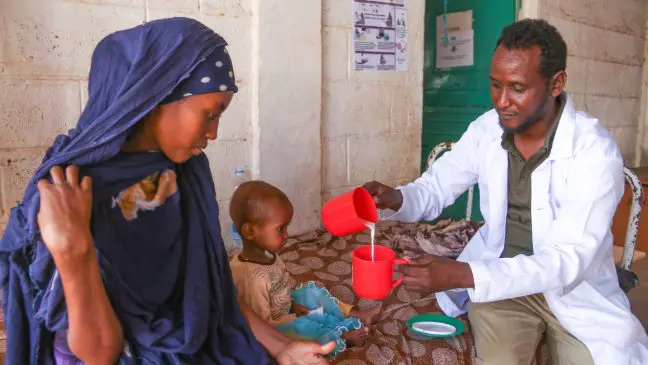



Access to healthcare is not a privilege. It is a fundamental human right. Yet for more than one in seven people in the developing world, that right remains out of reach. Preventable diseases go untreated, children suffer from malnutrition, mothers die in childbirth, and entire communities are trapped in poverty because illness and injury have no affordable remedy.
Islamic Relief South Africa works alongside Islamic Relief Worldwide to address this reality. We fund and deliver health programmes that reach the most vulnerable communities, from mobile clinics in remote areas to emergency medical support in active conflict zones. Our approach is holistic: we do not simply treat illness, we work to prevent it, and to build the health infrastructure that communities need to sustain themselves long into the future.

And from the fruits of date palm and grapes you get wholesome drink and nutrition: Behold in this is a sign for those who are wise.
Quran, 16:67
The Scale of the Health Crisis
The global health crisis disproportionately affects the world’s poorest communities. In low-income countries, infectious diseases remain the leading cause of death, healthcare infrastructure is severely under-resourced, and the cost of treatment pushes millions deeper into poverty every year. The figures below, drawn from Islamic Relief UK’s published data, reflect the scale of the challenge.
1 in 7
people in developing countries struggle to access basic healthcare
1 in 10
women in the poorest countries can die in childbirth due to inadequate care
100M+
people are pushed into extreme poverty each year due to healthcare costs
2.3M
children die each year from vaccine-preventable diseases